TradeZero Blog
The 3X Profit Protection Rule
Bob Iaccino's 3X Profit Protection Rule: when realized profit hits three times your daily risk unit, stop trading or cut size, and keep the good days good.

Does this Rally have Underlying Support?
The U.S. stock market continues to rally, but Richard Naso questions whether the rally has enough underlying support to last. Major indexes are approaching record highs, while semiconductors, small-cap stocks, and high-yield bonds are showing weakness.

The Drawdown Circuit Breaker: Building a Quantitative Trading Halt Plan
If your goal is to be a successful trader over the long term, then you've probably already figured out that some sort of stop-loss process needs to be part of every trade.

Can the Rally Broaden?
Richard Naso breaks down a market still led by technology and semiconductors, while weaker breadth and pressure in high-yield credit raise questions about the strength of the broader rally. This week’s Floor Lines also examines the latest U.S. jobs report, the growing momentum around quantum computing, and the key market signals Richie is watching in the week ahead.

Is There a Breakout Coming?
Richie Naso breaks down the latest market action, from strength in the Nasdaq and semiconductors to weaker small caps and high-yield credit. He also looks at rising margin debt, Meta’s recent rally, and the key economic data that could shape the market heading into October.
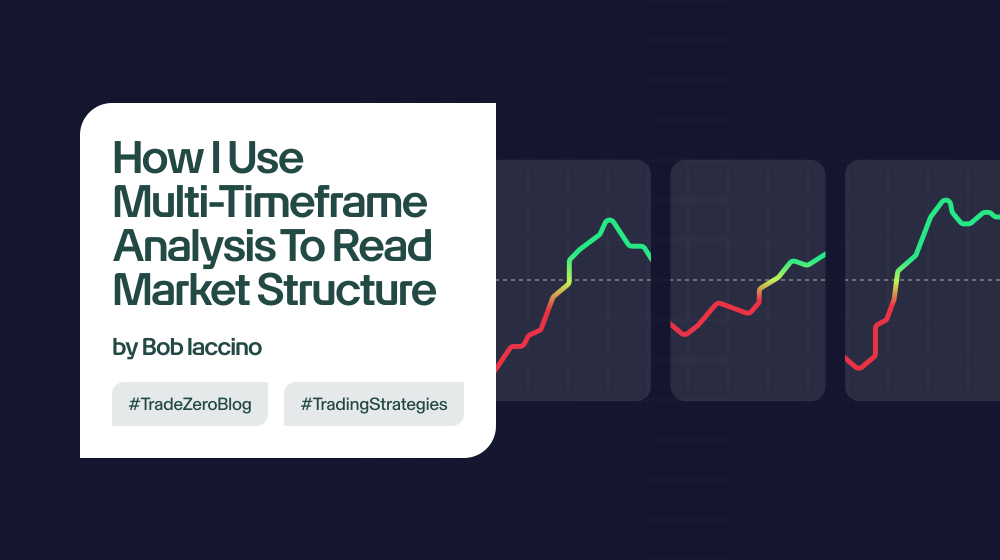
How I Use Multi-Timeframe Analysis to Read Market Structure — and Make Sure Nothing Is in the Way
Bob Iaccino explains how he uses multi-timeframe analysis — not to find trades, but to check that nothing on a higher timeframe is sitting between his entry and his target.

September Is Not Over Yet
The Dow had a difficult week, falling 890.65 points, or 1.7%, to 51,682.64. That was the Dow’s third consecutive weekly decline and its worst week since March. Friday added to the pressure, with the index falling another 95 points, or 0.18%.

Rate Hike or No Rate Hike
The Dow had a difficult week, falling 840.96 points, or 1.6%, to 52,573.29. It was the Dow’s worst weekly performance since March, despite a strong rebound on Friday.

The Anatomy of a High-Probability Breakout
Bob Iaccino explains what separates a high-probability breakout from a false one — why confirmation of the retest is the real signal, where the stop belongs, and the three entry points most traders get wrong.
Jobs Report VS. Interest Rates
The Dow had a slightly negative week, finishing at 53,414.25 — down 0.51% on Friday and about 0.3% for the week. The big story was interest rates. The week started with some weakness, followed by a strong Thursday rally as Fed Governor Christopher Waller suggested rates could potentially be held steady if inflation continues to ease.