Trading Strategies
The Drawdown Circuit Breaker: Building a Quantitative Trading Halt Plan
If your goal is to be a successful trader over the long term, then you've probably already figured out that some sort of stop-loss process needs to be part of every trade.
How I Use Multi-Timeframe Analysis to Read Market Structure — and Make Sure Nothing Is in the Way
Bob Iaccino explains how he uses multi-timeframe analysis — not to find trades, but to check that nothing on a higher timeframe is sitting between his entry and his target.

The Anatomy of a High-Probability Breakout
Bob Iaccino explains what separates a high-probability breakout from a false one — why confirmation of the retest is the real signal, where the stop belongs, and the three entry points most traders get wrong.
Building a Scanner Tech Stack: Layering Intraday Filters for Smarter Screening
A scanner tech stack is the combination of data feeds, filters, alerts, and timeframes a trader can layer into a single screening system. Instead of acting on one indicator in isolation, a well-built trading stack typically includes a signal to confirm across multiple conditions and timeframes before you commit capital. No single tool gets you there — the edge is in the architecture. Here’s how to build effective scanner setups for technical screening, layer by layer.
Stock Scanner vs. Stock Screener: What’s the Difference and Why It Matters for Day Traders
A stock screener filters the full universe of listed stocks against static or end-of-day criteria to build a watchlist before you trade. A stock scanner monitors live market data during the session and flags stocks the moment they meet your conditions. In short: a screener tells you what to watch. A scanner helps you evaluate when to act.
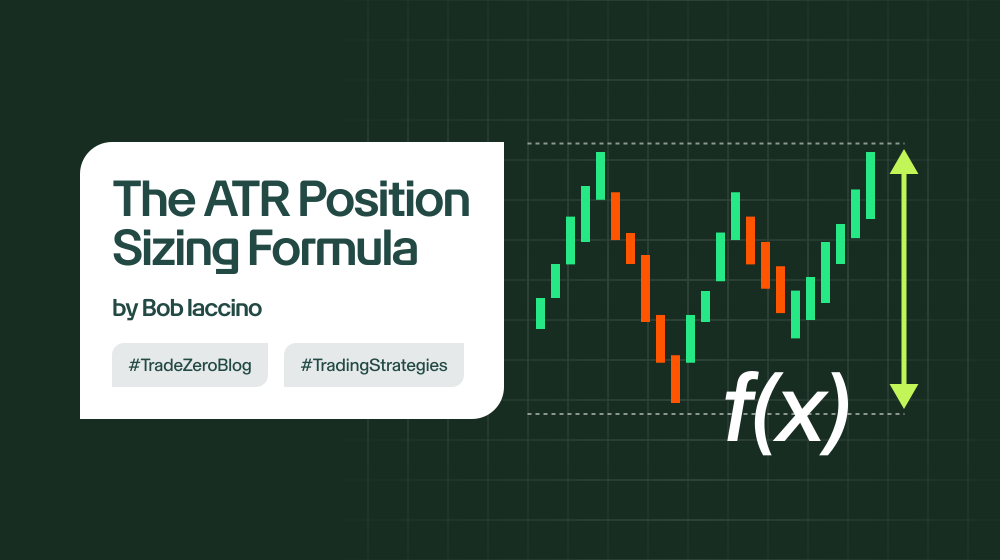
The ATR Position Sizing Formula: How to Size Every Trade Around Volatility
Molly and Robert are fictional traders (any resemblance to actual traders, profitable or otherwise, is purely coincidental). Robert trades a fixed number of shares regardless of the stock, and he uses a fixed dollar amount for his stop.
How to Identify When NOT to Take a Trade
Almost everything written about trading is about how to find a trade. Which patterns to look for, which indicators to run, which levels matter.Very little is written about the opposite skill — recognizing a setup that meets every visual criterion and deciding not to take it.
How to Build a Trading Watchlist: A Step-by-Step Guide
A lot of traders start their week by opening the market on Monday morning, scanning charts, and reacting to whatever is moving. That's not a process. That's noise management. And noise management, in my experience, leads to reactive trades — the kind where you're always a step behind the move you wanted.
Your Win Rate Could Be Lying to You
A 40% system can beat a 70% one. Win-rate was never the edge. Learn what actually decides the outcome with veteran trader Bob Iaccino.
How to Identify and Avoid the Most Common Trading Myths
Bob Iaccino breaks down the most damaging myths in trading — from more screens meaning more money to high win rates meaning profitability — and explains what actually matters for day trading and active trading success.