Parabolic SAR Indicator: How Traders Use It to Spot Turns and Control Risks
March 16, 2026

Parabolic SAR Indicator
By: Shane Neagle
The Parabolic SAR (Stop and Reverse) is a trend-following indicator made for identifying direction, continuation, and potential reversal in an asset’s price action.
It was developed by renowned technical analyst J. Welles Wilder and functions through plotting dots above or below price.A dot below signals an uptrend, whereas a dot above suggests a downtrend. When the dots flip, it often signals a trend shift.
One of the Parabolic SAR’s main features is its immediate visual feedback — its dot-based design may be useful for those analyzing fast-moving markets. Traders often apply the indicator in different ways, such as monitoring intraday moves, tracking momentum shifts, or observing potential short-selling setups when trends begin rolling over.
In contrast with other common technical indicators such as moving averages (MAs) and oscillators,the Parabolic SAR stands apart by offering a price-reactive, visually intuitive signal that isn’t hampered by the delays of smoothing or recalculation.
Among TradeZero users, this indicator is a favored tool due to its speed, simplicity of use, clarity, and versatility across different timeframes and strategies.
What is the Parabolic SAR?
As we’ve mentioned, the Parabolic SARplots dots either above or below price action. When the dots appear below the price, the indicator denotes upward momentum. Conversely, when they flip above, it suggests that a shift toward a downtrend is in progress — and that a reversal could be about to happen.
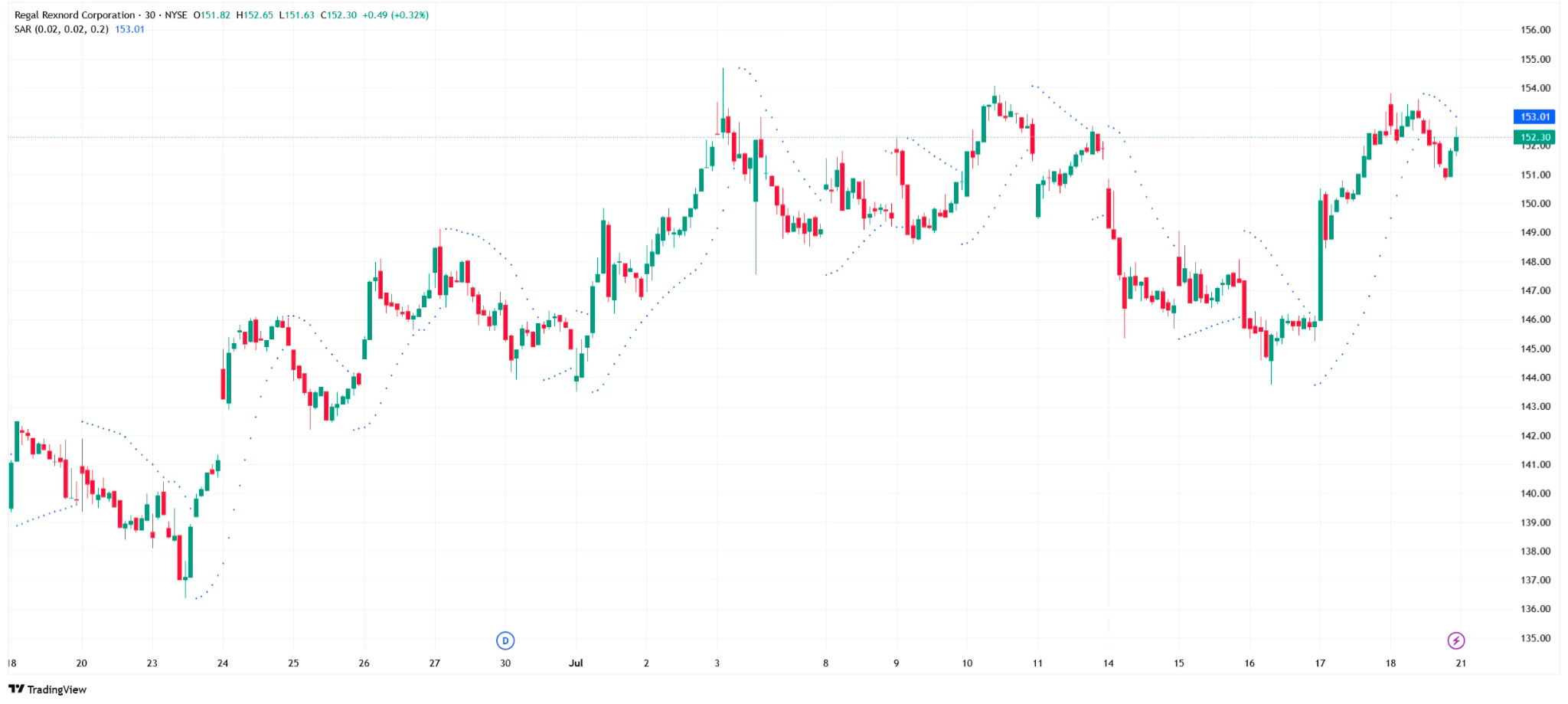
Developed by J. Welles Wilder, SAR was created with fast-moving markets in mind. The indicator’s structure is made to react quickly once momentum begins to shift and give traders a visual cue to adjust their outlooks, regulate position sizing, tighten stops, or prepare for a reversal setup.
Unlike moving averages, which smooth out past data, or oscillators, which simply indicate overbought or oversold conditions, the Parabolic SAR projects potential exit or entry points by following price acceleration.
The indicator’s parabolic trail can also act as a dynamic guide for stop-loss placement, helping traders lock in profits or manage risk during directional moves. While it isn’t a great fit for choppy price action or sideways markets, the Parabolic SAR offers real utility when prices are volatile and setups move quickly.
How It Helps Identify Trade Setups
The Parabolic SAR is most effective when used either to follow strong trends or to pick up on and act on shifts in momentum. Traders commonly rely on it to confirm that a trend is either gaining steam or starting to reverse because it responds to price acceleration in real time.
When the dots flip from below price to above, or vice versa, the visual shift signals that the current directional move may be stalling and that a potential entry or exit is now on the table.
On the other end, traders who focus on riding momentum often use the Parabolic SAR to stay with the trend as long as the dots remain favorable, then flip bias or manage risk once the structure breaks.
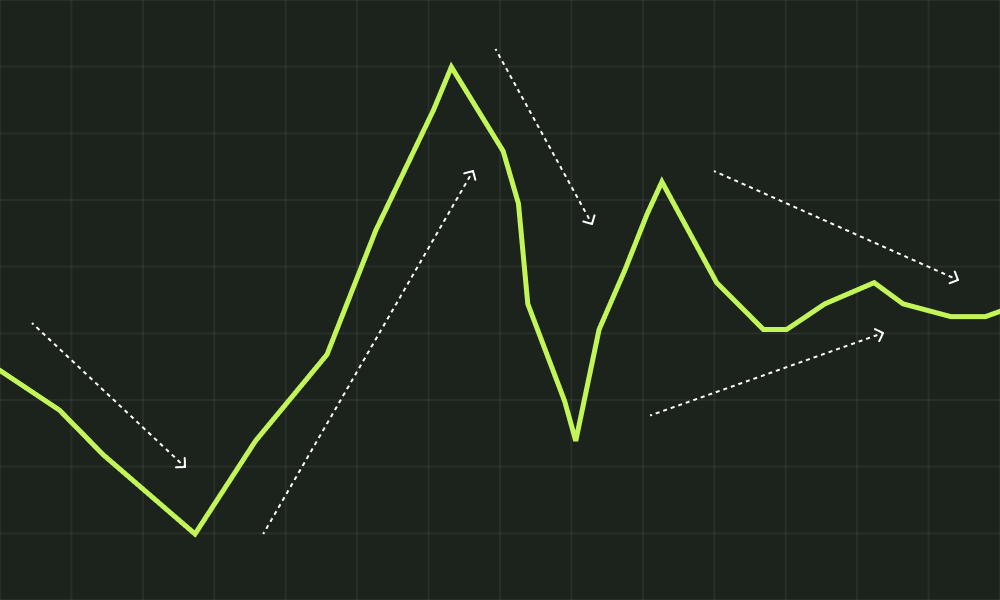
In volatile assets, particularly those that often experience fast intraday swings, the indicator offers a way to time decisions without having to rely on lagging data. The Parabolic SAR is also commonly used to trail stop levels on trending moves, and can help traders stay in profitable trades as long as possible while still maintaining the ability to respond quickly if momentum begins to fade away.
Readers should note that SAR is rarely used in isolation. It pairs well with tools like the Relative Strength Index (RSI), another brainchild of J. Welles Wilder,which is often used to identify overbought and oversold conditions.
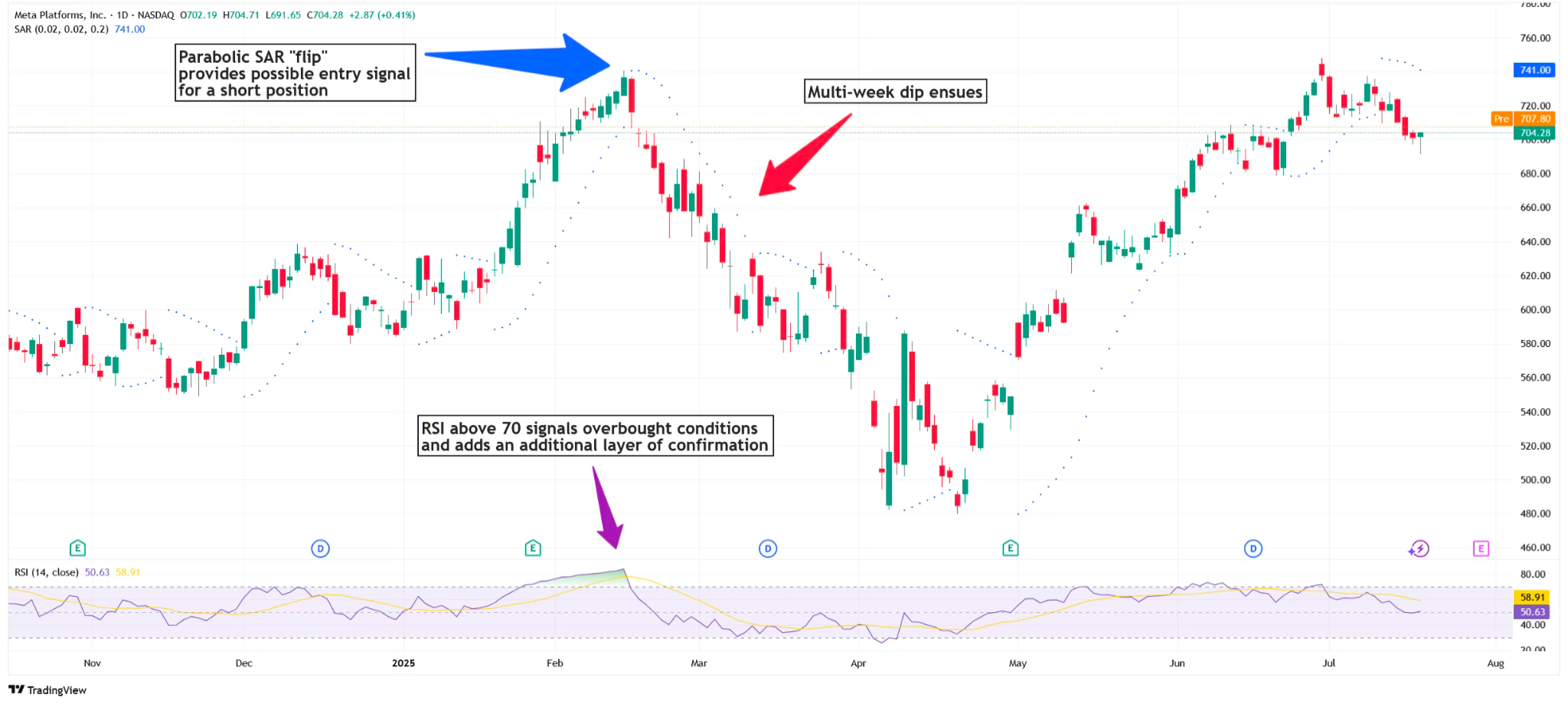
Support and resistance levels, as always, provide another useful layer of context — for instance, a SAR flip at resistance could signal a short selling opportunity, while a flip at support may confirm a bounce.
When applied with broader market context, the Parabolic SAR may help reduce uncertainty by providing a structured visual framework for entries and exits. The indicator gives structure to entries and exits, encourages discipline when momentum shifts, and enhances clarity in fast-moving conditions where timing is of the essence.
Using Parabolic SAR for Short Selling
The Parabolic SAR is especially valuable for short sellers looking to take advantage of momentum reversals or manage existing trades.
Once the dots flip from below price to above, it can signal that upward momentum has lost steam. For traders focused on backside moves or failed breakouts, this flip often marks the transition from strength to weakness.
When it comes to short-selling, a SAR flip following a parabolic run or failed breach of resistance can confirm that a reversal is underway. When paired with weakening volume, lower highs, or rejection at key technical levels, Some traders interpret SAR flips — particularly when combined with other signals such as weakening volume or lower highs — as potential indications to consider adjustments to short-biased strategies.
Beyond entries, the Parabolic SAR is also useful for managing your exits on existing short positions. As price moves lower, the dots trail above — providing a dynamic framework for placing stop-loss orders that tighten as the trade progresses. This trailing effect helps lock in gains without overexposing yourself to sudden reversals.
In volatile assets, SAR’s responsiveness is sometimes viewed by short sellers as a helpful tool for tracking momentum shifts. Instead of having to rely solely on static support levels or slow-moving indicators, SAR reacts to the actual change in price behavior — showing in real time when the trend may be rolling over.
Whether used to confirm a breakdown, trail stops, or add structure to a short-biased plan, SAR provides short sellers with the kind of reactive, rule-based feedback that supports faster execution and more disciplined trade management.
Common Mistakes to Avoid with SAR
For all of its strengths, like any other tool, the Parabolic SAR also has limitations — and traders have to be aware of them in order to leverage the indicator to its fullest potential.
First and foremost — the Parabolic SAR is a fast-reacting tool — and that speed can become a liability if used without context.
One of the most common mistakes traders make is applying SAR in sideways or choppy markets. When price lacks directional momentum, the indicator tends to flip repeatedly — thus producing false or low-conviction signals that can lead to premature entries or exits.
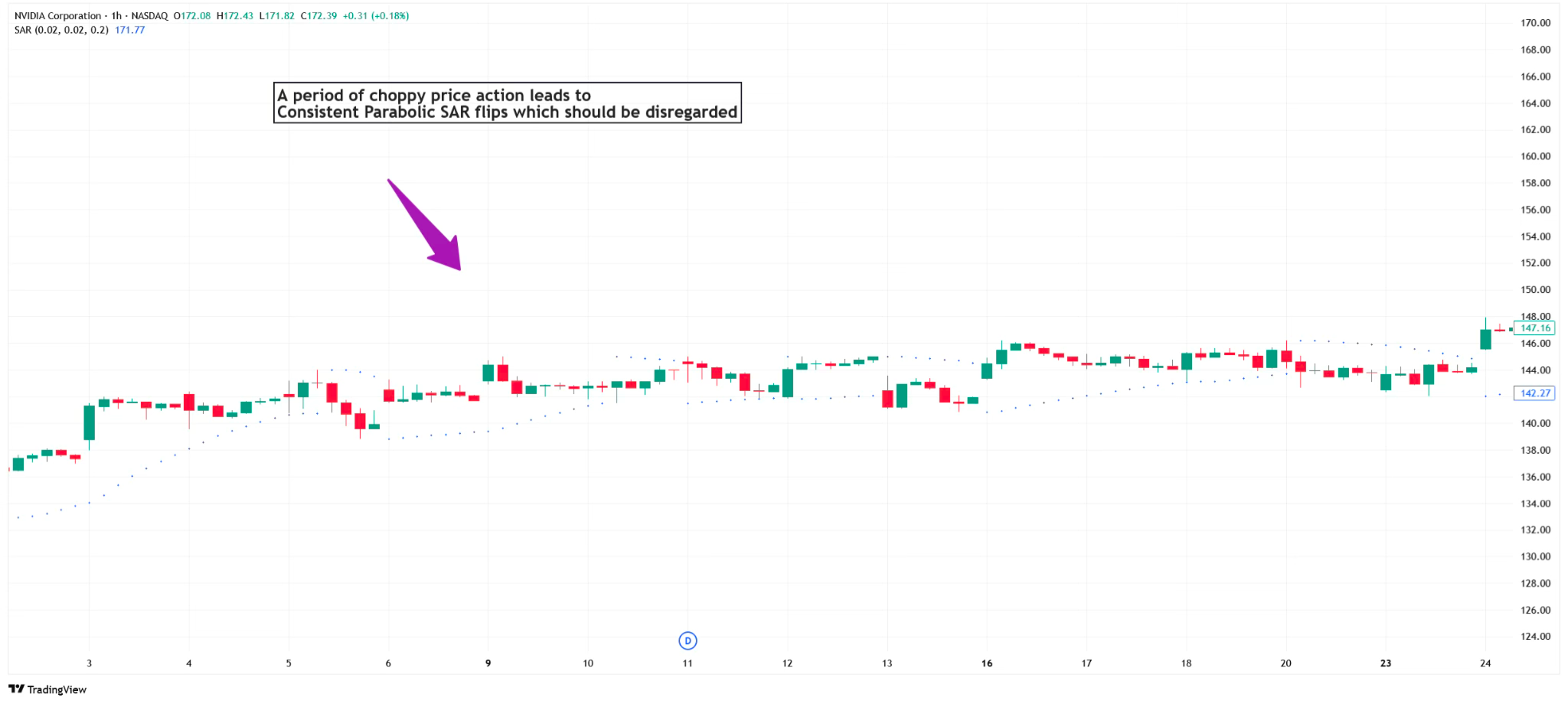
Another misstep is using SAR in isolation. While its dot-flip signals are visually clear, they shouldn’t be treated as standalone entry triggers.
Traders should always keep the wider context of the trade in mind. Without additional confirmation from price action, volume, or other technical tools, SAR may give the illusion of clarity in setups that, in reality, lack real conviction.
Veteran traders who use SAR also leverage RSI, moving averages, or basic support and resistance tend to avoid this trap by seeking alignment before committing to a trade.
Misplaced stop-losses are another risk. Because SAR creates a natural trailing stop framework, some traders rely on it too heavily — setting stops too close or failing to account for price volatility. In fast-moving names, this can result in unnecessary stop-outs even when the broader setup remains intact.
Lastly, traders sometimes overestimate SAR’s predictive value. The indicator doesn’t forecast tops or bottoms — instead, it reacts to momentum changes. Using it correctly means treating it as a confirmation and management tool, not a predictor.
Once all is said and done, to get the most from SAR, traders need to understand its strengths, compensate for its weaknesses, and apply it within a broader framework that prioritizes structure and confirmation.
Why Traders Use the Parabolic SAR in Fast-Moving Markets
Speed and clarity are critical in active trading — and many traders find the Parabolic SAR’s visual format useful for responding quickly to price action. Its dot-based design offers real-time feedback on trend momentum, helping traders spot when a move is accelerating, stalling, or reversing. That immediacy gives it an edge over lagging tools like moving averages, which may confirm a shift only after the key opportunity has passed.
Because the dots trail price dynamically, SAR makes it easy to manage open positions in fast-moving setups. When momentum is strong, the dots widen — giving room to ride the move. When momentum slows, the dots tighten — signaling it may be time to reduce risk, take profit, or flip bias altogether. This trailing effect is especially useful for adjusting stop levels as price evolves.
In intraday and swing strategies, timing is everything. Many traders use SAR to stay aligned with momentum on the way up — or to catch the turn on the way down. It’s not just about the initial entry, but about how the trade is managed as conditions change. In volatile environments, even small delays can erode edge — and SAR helps reduce that risk by reacting to price behavior in real time.
Experienced traders often pair SAR with tools like volume, volume-weighted average price (VWAP), or moving averages to confirm trend strength or identify exhaustion. When used this way, it reinforces structure without slowing execution.
Among TradeZero’s active user base, the Parabolic SAR remains popular for precisely these reasons: fast signals, clean structure, and the flexibility to adapt in real time — whether the goal is to ride a breakout, fade a rally, or adjust stops as the trade unfolds.
Conclusion
The Parabolic SAR is a practical tool for traders who need structure when momentum shifts. Its real-time, visual format makes it easy to spot potential reversals, manage stops, and stay aligned with fast-moving price action — without relying on lagging signals.
In volatile conditions, it adds clarity where hesitation can be costly. Whether the goal is to trail a trend or respond quickly to a breakdown, SAR helps reinforce discipline and timing. For active traders, the Parabolic SAR may help interpret short-term price behavior by offering a defined visual reference point — one dot at a time.
Disclaimer
This content (“Content”) is produced by Tokenist Media LLC. The Content represents only the views and opinions of Tokenist Media LLC.Tokenist Media LLC’s trading experiences and accomplishments are unique, and your trading results may vary substantially. Tokenist Media LLC is a paid marketing partner of TradeZero that receives compensation from TradeZero for broadcasting, displaying, and/or presenting marketing and sponsorship materials that promote TradeZero. TradeZero does not endorse the Content and makes no representations or warranties with respect to the accuracy of the Content or information available through any referenced or linked third party sites. The Content has been made available for informational and educational purposes only and should not be considered trading or investment advice or a recommendation as to any security.
Trading securities can involve high risk and potential loss of funds. Furthermore, trading on margin is for experienced investors and traders only as the amount you may lose can be greater than your initial investment. Likewise, short selling as a securities trading strategy is extremely risky and can lead to potentially unlimited losses. Options trading is not suitable for all investors as it can involve risk that may expose investors to significant losses. Please read the Characteristics and Risks of Standardized Options, also known as the options disclosure document (ODD) at OCC before deciding to engage in options trading.
TradeZero provides self-directed brokerage accounts to customers through its operating affiliates: TradeZero America, Inc., a United States broker dealer, registered with the Securities and Exchange Commission (SEC) and member of the Financial Industry Regulatory Authority (FINRA) and the Securities Investor Protection Corporation (SIPC); TradeZero, Inc., a Bahamian broker dealer, registered with the Securities Commission of the Bahamas; TradeZero Canada Securities ULC, a Canadian broker dealer, member firm of the Canadian Investment Regulatory Organization (CIRO) and member of the Canadian Investor Protection Fund (CIPF); and TradeZero Europe B.V., a Dutch broker dealer, authorized and regulated by the Dutch Authority for the Financial Markets (AFM) (collectively, the “TradeZero Broker Dealers”).